


Written by leading commercial law barrister and academic, Adam Kramer KC, this work, now in its 4th edition, has established itself as a leading practitioner text on the topic of damages in contract law and commercial disputes and is regularly referred to and cited in and by courts.
Part II is structured according to the type of breach of obligation, such as service obligations (includes commercial services, and also employment) loss of use of money, providing detailed analysis facilitating the read across from cases outside the particular practice area (most commodities lawyers don't know landlord and tenant cases, most professional negligence lawyers don't know employment cases, etc). It can be used by those in a particular area (construction, sale of goods, financial disputes) whilst also providing cases and answers outside the specialist works on those areas.
Part III deals with factual causation and actual loss.
Principles of remoteness, mitigation and legal causation are dealt with in Part IV, with Chapter 18 on causation in practice uniquely structured in categorising cases on breaks in the chain of causation by the type of event (e.g. claimant speculation, post-breach dealings with defendants, receipt of benefits from third parties).
Particular types of loss requiring separate examination are dealt with in Part V whilst other matters such as third parties and loss; negotiating damages; non-compensatory damages, concurrent claims and exclusion clauses are discussed within Part VI.
Features
• Very detailed case law coverage and very practical in approach.
• Focuses on English and Welsh law but with substantial coverage of other Common Law decisions.
• Comprehensive, covering both practical concerns/dispute patterns and academic debate.
• To aid understanding and practicality, the book is arranged by the type of complaint (eg mis-provision of services, non-payment of money or the temporary loss of use of property etc).
• In addressing causation, it divides relevant cases and rules between the breach position (what actually happened and what will happen) and non-breach position (what would or might have happened but for the breach, including loss of chance).
• When considering remoteness, mitigation and legal causation, cases are analysed and categorised on breaks in the chain of causation by type of event (eg failing to avoid the danger; failure to terminate the contract etc).
• Cases from all contractual fields are considered, not only those usually referred to (construction, sale of goods, charter parties; professional services) but also those less frequently covered in general works (such as SPAs, banking contracts, breach of exclusive jurisdiction clauses, insurance and landlord and tenant).
• Tort decisions are referred to where relevant, including full coverage of professional negligence damages.
• Detailed explanation of many practically important but often neglected areas, such as damages for lost management time, whether hedging costs are recoverable, and the how to prove lost profits.
What's New
The text has been reviewed and fully updated to take account of important case law developments, in particular:
• Barrowfen Properties v Patel (2025, Court of Appeal, causation and loss of chance)
• BP Oil International Ltd v Glencore Energy UK Ltd (2023, High Court, sale of goods)
• Cessnock City Council v 123 259 932 Pty Ltd (2024, High Court of Australia, causation and actual loss)
• Costcutter Supermarkets Group Limited v Vaish (2024, EWHC 152 (KB), causation and loss)
• Durber v PPB Entertainment Ltd (2024, High Court, damages for breach of contract)
Price:
HKD 4,134.00
Format: Book & eBook
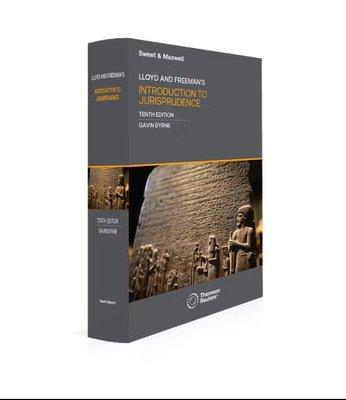
Lloyd and Freeman's Introduction to Jurisprudence is the leading textbook on jurisprudence in the English-speaking world. It enables the reader to develop a good understanding of the theories of the different schools of jurisprudence, and to appreciate the contributions made to legal theory by leading jurists and others, from ancient times to the present day.
Lloyd combines a substantial text with extracts from a wide range of authoritative sources. The works of more than 150 jurists are extracted, from Aristotle to Judith Butler, and beyond. These are supported by detailed and well-documented introductory sections which offer critical insight into the texts. Students and their teachers will profit from having in one book a wide-ranging compendium of legal thought. Lloyd is a library in itself.
This tenth edition includes significant reorganisation of the text into two distinct sections: Schools of Thought and Themes; together with 11 new extracts from modern sources, bringing the debate right up to date.
Lloyd and Freeman's Introduction to Jurisprudence offers both text and library, enabling students to find, comprehend and evaluate the core materials, classical and contemporary, in one of the most difficult but exciting of disciplines.
Price:
HKD 708.00
Format: Book & eBook
Trusted by professionals for over 100 years, this acclaimed resource sets the standard in non-marine commercial insurance law. With expert commentary on the latest legal developments and a reputation for clarity and authority, it's an indispensable tool for staying ahead in a complex and evolving field.
It explains foundational aspects of UK insurance law-such as the principles of misrepresentation and utmost good faith-and provides an in-depth look at the concept of loss, including key issues like causation and notification requirements. The book also explores specific insurance sectors, with chapters covering third-party liability, the rights of third parties against insurers, coordination between multiple insurers, and the legal treatment of double insurance.
Since the last edition there have been the usual steady stream of reported cases and regulatory developments. Notable examples are cases arising as a consequence of the COVID-19 lockdown dealing with, among other things, important questions of construction and causation, decisions on insurable interest, the application of s.11 of the Insurance Act 2015, illegality, good faith and exclusion of the 2015 Act's provisions, the Third Parties (Rights against Insurers) Act 2010 and aggregation clauses in liability policies. We also consider the new "consumer duty" issued by the Financial Conduct Authority.
Specific discussion focuses on the following cases:
Price:
HKD 7,164.00
Format: Book & eBook
Marsden and Gault forms part of the highly respected British Shipping Law Series. It serves as an in-depth guide to the specialist and self-contained area of Collision and Loss in maritime law examining recent cases and convention developments. The commentary proceeds seamlessly from navigational fault and the interpretation of the Collision Regulations, towards special liability regimes and pollution.
Updates to the 16th edition include:
The 16th edition also covers all relevant cases, including:
Price:
HKD 5,616.00
Format: Book & eBook

Covers standard industry documents providing the legal framework for upstream, midstream and downstream petroleum contracts, with accompanying commentary on their application to energy transactions and related matters
• Looks at issues relating to mineral laws, including licences, and host government and inter-governmental agreements
• Examines preliminary participation contracts, including agreements and concessions relating to confidentiality, area of mutual interest, joint study, joint bidding and joint wells; data trade and sharing contracts; and enforceability of reasonable endeavour and best endeavour covenants
• Assesses model form joint operating agreements, including contents, accounting procedure, and trust deeds
• Examines drilling, procurement and services contracts
• Discusses the principles of unitisation and unitisation agreements, and considers pooling and other joint development options, pre-unit agreements, UUOA and JOA relationships, principles of petroleum lifting and commingling, balancing agreements, title interests, allocation and attribution/substitution agreements
• Advises on petroleum management contracts including those for provision of petroleum processing and operational services; third party access to infrastructure, project structures for gas liquefaction and LNG regasification, contracts for terminal access and provision of services
• Deals with oil, gas and LNG sales contracts dealing in detail with their respective terms
• Goes through shipping contracts, including ship leasing, time and voyage charter-party terms, contracts of affreightment and bills of lading
• Addresses pipeline transportation contracts, looking at the transporter and shipper perspectives, pipeline system rules, sales and transportation contract interfaces, cross-border pipeline investment protection, agreements for pipeline crossing, proximity and tie-in, and pipeline capacity management agreements
• Extends coverage to interest sale and purchase contracts, including asset exchange contracts, farm out and earn out agreements, addressing pre-emption, due diligence, representations and warranties
• Features decommissioning and security contracts
• Includes contractual clauses for the construction of petroleum infrastructure
• Examines corporate and project finance agreements, taking into account contingent consideration, royalty deeds, volumetric production payments, reserves-based lending agreements, debt prioritisation and security interests
• Examines options for the negotiated, arbitration and judicial resolution of disputes involving oil and gas contracts and projects, including governing law and jurisdiction provisions
• Covers dispute resolution
Price:
HKD 6,228.00
Format: Book & eBook

For the ultimate guide to insurance contract law, look no further than Colinvaux's Law of Insurance. Divided into three parts, the first section delves into the key principles of insurance contracts, covering terms and conditions, loss and recovery limits, causation, subrogation, and claim notifications.
The subsequent sections focus on the various parties involved and the distinctive features of special types of insurance contracts in the UK, such as liability policies. The commentary provides expert examination of rights and issues, supported by analysis of the most recent and significant case law.
Colinvaux's Law of Insurance is updated annually to ensure you are always up to date. Key features include:
New to this edition:
Recent editions have chronicled the legal consequences of various disasters, including mesothelioma claims following the establishment of tort liability in the Fairchild case in 2001, the Christchurch earthquakes in 2010-2011, and the COVID-19 pandemic beginning in March 2020. These matters have thrown up entirely new legal issues and have challenged what was thought to be orthodox learning on old ones. Key questions arising from them, and in particular the application of business interruption policies to COVID-19 losses, remain unresolved and feature heavily in the present edition. The Russian invasion of Ukraine on 24 February 2022 has highlighted a further range of questions which can be and has been answered only by resort to, and reinterpretation of, earlier authority.
The Consumer Insurance (Disclosure and Representations) Act 2012, the Third Parties (Rights against Insurers) Act 2010, and the Insurance Act 2015 have been in force for around a decade. After a slow start, cases are now beginning to come through on the proper interpretation of the legislation. This edition provides detailed commentary on these emerging decisions, highlighting how courts are now interpreting the legislation in practice.
Price:
HKD 6,240.00
Format: Book & eBook

Professor Katy Barnett provides authoritative and practical guidance on the nature, extent, and limitations of damages individuals and companies can claim in the event of breach of contract.
Clearly setting out what the law is, this new title is written with practitioners in mind. It will also be of real value to students and academics as it considers some of the theoretical debates surrounding this topic.
The book is divided into three parts and each chapter within those parts offers a clear structure and summary of key issues courts and parties should consider:
I. Consequences of breach of contract
Considers how to measure and understand the concept of expectation loss; provides guidance on measuring reliance loss (or 'wasted expenditure'); outlines best approach to negotiating damages; discusses situations where non-pecuniary loss may be awarded; looks at accounts of profits; considers other kinds of awards (nominal, exemplary and actions for debt)
II. Attribution of Responsibility:
Considers causation and how it operates as a limit to the availability of damages; remoteness of damage and the rule in Hadley v Baxendale; and explains fully how mitigation operates via the avoidable and avoided loss rule
III. Limitation and Exclusion of Liability
Discusses how damages can be stipulated in a contract and how that ability can be impinged upon (rule against penalties and statutory prohibitions); considers clauses which exclude or limit liability.
In addition, a number of topics of interest to practitioners are addressed:
Breach of warranties (e.g., warranties of authority, quality and reasonable care in the context of share purchase agreements)
Guidance on pleading and proving loss, including an explanation of the fair wind principle
Damages for breaches of dispute resolution clauses such as arbitration and exclusive jurisdiction clauses and confidentiality agreements
The principle of transferred loss
WHAT'S NEW: This new edition has been fully updated to take account of important case law developments. See in particular:
Armstead v Royal Sun Alliance Insurance Company Limited [2024] UKSC 6, [2024] 2 W.L.R. 632;
Cessnock City Council v 123 259 932 Pty Ltd [2024] HCA 17, 98 A.L.J.R. 719;
Costcutter Supermarkets Group Limited v Vaish [2024] EWHC 152 (KB);
Durber v PPB Entertainment Ltd
Price:
HKD 3,978.00
Format: Book & eBook

Darbyshire on the English Legal System provides students with an engaging, thought-provoking, and highly readable introduction to the contemporary legal system of England and Wales. The work explains and critically evaluates the elements of the English Legal System in their practical (real world) and historic context.
Price:
HKD 498.48
Format: Book & eBook

Wilkinson's Road Traffic Offences covers all the criminal offences linked to motoring, including speeding, drink driving, dangerous driving, insurance violations, licence violations, offences concerning the condition of vehicles, etc.
In addition to commentary relating to this range of offences, the title also includes definitions of motoring terms and court procedural information and instructions to guide practitioners through this area of the law from both a prosecution and defence perspective.
Features:
• Sets out the basic principles and clarifies key terms, covering specific offences chapter-by-chapter ensuring relevant information is easy to find;
• Renowned and authoritative author team led by General Editor Kevin McCormac;
• Sets out the implications of recent legislative and case law developments;
• Key reference for road traffic lawyers, providing up-to-date and authoritative answers.
Price:
HKD 4,320.00
Format: Book & eBook

Securitisation is considered by many to be the "rocket science" of finance, especially formidable through a legal lens. It combines bonds, loans and derivatives into a single regulated ecosystem, designed to withstand insolvency. This new book presents a fulsome and accessible analysis of the legal principles underpinning securitisation, with references to relevant case law, statute and regulation and commentary on commercial context, market practice and documentation. The Law and Practice of Securitisation is the first dedicated in-depth English law title on the topic by specialist lawyers, examining all fundamentals through the securitisation microscope.
An essential guide to the law and practice of securitisation, from the basics to the most advanced aspects, organised into one complete body of knowledge:
• true sale
• advanced true sale: declarations of trust
• securitisation security and intercreditor arrangements
• securitisation cashflows and credit structuring
• securities, securities regulation, disclosure and due diligence
• credit rating agencies
• the securitisation vehicle and taxation
• the regulation of securitisation in the UK and the EU
• securitisation derivatives and repos
• sustainability and securitisation
• common securitisation structures
Price:
HKD 4,524.00
Format: Book & eBook
Applying IFRS® Accounting Standards to real transactions and arrangements can be a significant challenge. Also, in times of heightened uncertainty investors and regulators are looking for clarity in companies' annual reports, so companies should expect more scrutiny. Insights into IFRS can help. It is based on KPMG member firms' experience of applying IFRS Accounting Standards around the world and provides guidance on many interpretative issues.
Key features:
New to this edition:
Price:
HKD 2,172.00
Format: eBook
Glanville Williams: Learning the Law has been introducing students to the foundation skills needed to study law effectively for over 80 years. Now in its 18th edition and fully revised to meet the needs of the modern law student, it is still the must-have book for every student embarking upon a law degree.
New to this edition:
Price:
HKD 233.28
Format: Book & eBook

English Legal System � The Fundamentals guides you through the central principles of this core subject, using accessible language and helpful features to provide you with a clear understanding of the English Legal System.
Price:
HKD 498.48
Format: Book & eBook

English Legal System � The Fundamentals guides you through the central principles of this core subject, using accessible language and helpful features to provide you with a clear understanding of the English Legal System.
Price:
HKD 383.40
Format: Printed Book

Exclusion Clauses and Unfair Contract Terms examines, in a detailed, practical, and incisive manner, this important area of contract law. It provides guidance to the practitioner on drafting and using exclusion clauses effectively within the formative phase of a contract. Additionally, it offers commentary on the possibility of challenging an exclusion clause. The text deals with exclusion clauses and unfair contract terms in the context of both commercial and consumer contracts, considering the legal tests which are applied to determine whether the exclusion clause has been successfully incorporated, how it should be interpreted, and the extent to which it might be invalidated at Common Law and under statute.
Key features:
New to this edition:
Price:
HKD 4,446.00
Format: Book & eBook

Clerk & Lindsell on Torts, one of our flagship titles and part of the Common Law Library series, is an essential reference tool in Tort Law which is widely referred to by practitioners and cited by the judiciary.
Key features:
New material in the Second Supplement to the Twenty-Fourth Edition:
Price:
HKD 8,220.00
Format: eBook